Commemorative plaque unveiled in memory of three Dublin firemen: Peter McArdle, Robert Malone and Thomas Nugent
Dublin City Council today marked the 90th anniversary of one of the darkest nights in the history of Dublin Fire Brigade with the unveiling of a commemorative plaque honouring three firefighters who lost their lives in the line of duty at the former Exide Batteries premises on Pearse Street.
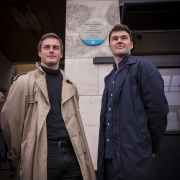
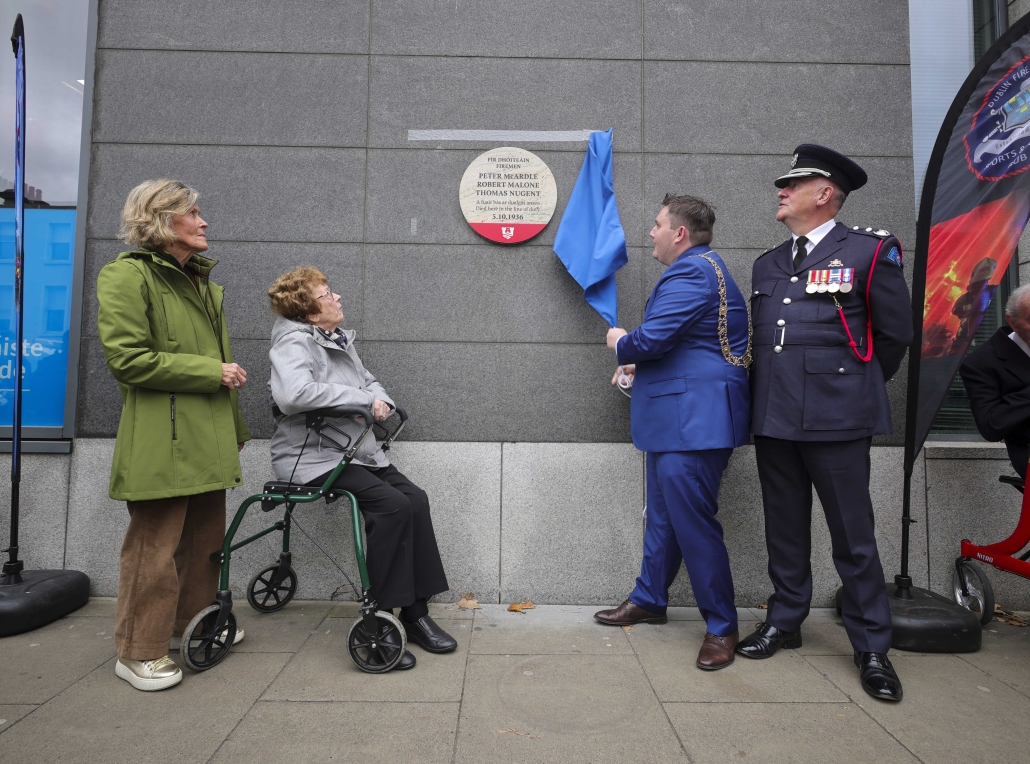
The plaque, unveiled outside the Naughton Institute, Trinity College Dublin, Pearse Street, commemorates Firemen Peter McArdle, Robert Malone and Thomas Nugent, who died while tackling a fire at the premises on 5 October 1936.
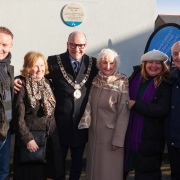
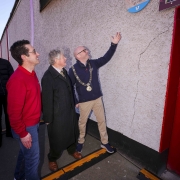
The Lord Mayor of Dublin, Daryl Barron, unveiled the plaque at a ceremony attended by the Chief Fire Officer; public representatives; Professor Damian Murchan, Dean of Students and Civic Engagement, representing the Provost of Trinity College Dublin; members of Dublin Fire Brigade and the Dublin Fire Brigade Retired Members Association; and members of the families of the three firefighters, including Stephanie Nolan, daughter of Peter McArdle.
Also attending were members of the family of Fireman Tommie Potts, who was blown from the roof of the building by the explosion and survived. His great-nephew and biographer, Seán Óg Potts, attended alongside representatives of the Irish Traditional Music Archive. Tommie Potts went on to become one of the most original traditional fiddlers of the twentieth century.
The ceremony also included a performance by a Dublin Fire Brigade piper and the reading of a memorial poem by firefighter and poet Ger Devine.
The tragedy of 5 October 1936 remains the greatest loss of life suffered by Dublin Fire Brigade in a single incident. On that night, Dublin Fire Brigade responded to a serious fire at the Exide Batteries premises on Pearse Street. Believing that a family could still be trapped inside, firefighters entered the burning building as part of the rescue effort. A series of explosions followed, causing much of the building to collapse.
Firemen Peter McArdle, Robert Malone and Thomas Nugent were buried beneath the ruins. Their remains were recovered the following morning after many hours of searching and the removal of approximately 30 tons of rubble.
Peter McArdle left a wife and seven children. His youngest daughter, Stephanie, was born three months after his death and never knew her father. Robert Malone was married and was a veteran of the 1916 Rising, having served at Boland’s Mills. Thomas Nugent was engaged to be married.
The deaths of the three firefighters had a profound impact on Dublin. Their bodies lay in state at City Hall before a civic funeral to Glasnevin Cemetery. More than 80,000 people lined the streets of the capital to pay their respects, with firefighters and representatives travelling from overseas to honour the men.
Speaking at today’s ceremony, the Lord Mayor of Dublin, Daryl Barron, said: “The night of 5 October 1936 resonates not only in the history of Dublin Fire Brigade, but in the history of our city. Ninety years later, we gather here to remember Peter McArdle, Robert Malone and Thomas Nugent and to acknowledge the extraordinary sacrifice they made in the service of the people of Dublin.”
“They were three men with families, friends, colleagues and futures ahead of them. They were also firefighters. And on that night, believing that a family was still trapped inside, they went into a burning building to bring them out. That is the simple fact at the heart of today’s commemoration.”
“This plaque is more than a marker on a wall. It is a permanent statement of remembrance. It tells future generations that Peter McArdle, Robert Malone and Thomas Nugent were here; that they served this city; that they faced danger on behalf of others; and that Dublin remembers them.”
Acknowledging Fireman Tommie Potts, the Lord Mayor said: “The story of a tragedy is never only the story of those who died. It is also the story of those who survived, those who mourned, those who carried the memories, and those who passed those memories down through the generations.”
“Tommie’s story connects the history of Dublin Fire Brigade with another great part of the city’s cultural heritage – our traditional music.”
The Lord Mayor thanked Trinity College Dublin for giving permission for the plaque to be erected, and acknowledged the work of Dublin City Council’s Commemorations and Naming Committee, Dublin Fire Brigade and the Dublin Fire Brigade Retired Members Association in preserving the history of the Brigade.
The plaque is one of a series of four marking locations in Dublin city centre where seven Dublin Fire Brigade members lost their lives in the line of duty. The series was proposed by retired Dublin Fire Brigade firefighter and fire service historian Las Fallon and approved by Dublin City Council’s Commemorations and Naming Committee, whose chair, Councillor Donna Cooney, said: “The Commemorative Plaques Scheme allows the city to formally commemorate people who have made a significant contribution to the life of Dublin. We welcome suggestions from the public for people and events to be commemorated. Full details are on the Council website. This is the 78th plaque approved under the scheme.”